Uncategorized

Borealis Philanthropy: How CURE Delivers Organizational Transformation Against the Odds

In July, Borealis Philanthropy interviewed CURE's Dr. Judy Lubin (she/her). Click on the link below to read Judy's full reflections on CURE's resiliency throughout a turbulent past year and a half, and what learnings she is taking forward into the future. Rewind: Last year was an overwhelming year for racial equity practitioners, whose gifts were called upon in record numbers by many organizations across multiple sectors.  What was that moment like for you?   Judy: As we were getting lots of calls and email inquiries about working with us, one of the questions we were asking ourselves was: were we going to change our practice in any way? Were we going to do our work differently? Our process usually is nine months minimum to do racial equity organizational change work, but we started asking ourselves is there a racial equity organizational change process that we could develop to be responsive to the needs and the demand at the moment? And we realized that no, we can't shortchange the work that needs to happen. It takes a certain level of time and care and attention to do really deep racial equity work, and we would just have to be very discerning in who we were partnering with to get a sense of what their needs are, how they are coming into the work, and whether they were ready to go into our process of deep reflection, training, assessment, and action planning. From the last year and a half, what are 1-2 achievements that you are most proud of as it relates to CURE’s racial equity organizational change work?  Judy: I certainly am proud of how we have adapted to the moment in terms of the pandemic really forcing us to figure out how we would do work that we normally would do in person that now is all virtual. Before COVID-19, we would travel to be in person with our client partners for all of our workshops and trainings, so we had to take the time to really adapt our training materials and curriculum to be in a virtual setting. And I personally at the beginning, was a little wary about whether we could have the types of conversations and dialogue that we normally have in person in a virtual setting. I have been surprised and really proud that we have been able to make those adjustments and have been able to hold space for the conversations and the work that needed to happen with our client partners. What are 1-2 lessons or unresolved questions for you/CURE?  Judy: How are we approaching racial equity work in a way that centers the trauma or recognizes the trauma that Black and brown people are experiencing coming into the work? Pre-pandemic, if there was someone crying in our sessions, it was often a white person crying; now it's Black and brown staff crying in sessions. We're hearing staff of color say that sometimes it can feel as if they're placing their emotions and lived experiences on display for the benefit of learning and change that needs to happen among their white colleagues. As a result of these dynamics, one of the questions that we’re sitting with is: how do we strengthen the ways in which we center and care for Black and brown people in the work, and are there additional spaces that we can help support? We've begun to do this with a couple client partners where we've held sessions focused on self-care for Black and brown staff, are actively encouraging affinity groups, and are asking partners to think about how to provide space, time off and compensation to Black and brown staff leading the change work happening in their organizations. Read the full interview here.   [ld_content_box style="s06" image="9486" img_link="url:https%3A%2F%2Fborealisphilanthropy.org%2Fhow-cure-delivers-organizational-transformation-against-the-odds%2F|||" title="How CURE Delivers Organizational Transformation Against the Odds"][/ld_content_box]
Uncategorized

Talent Justice Webinar Recording and Recap

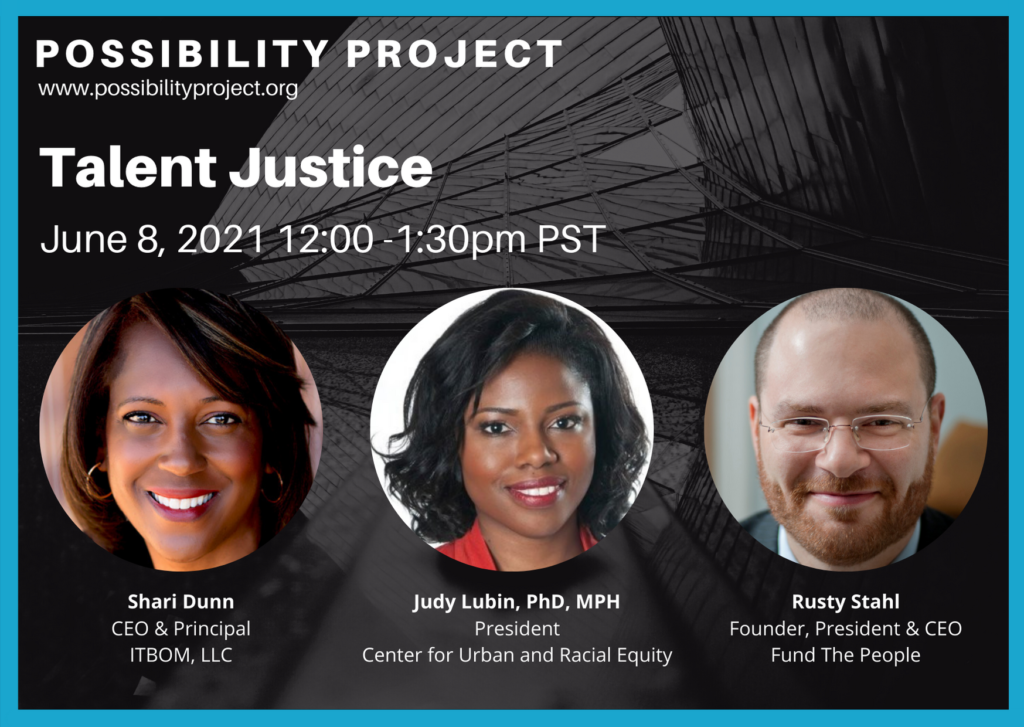
Last month, CURE’s Dr. Lubin joined other experts to discuss who can afford to work in the social sector, where accountability lies for equitable staff compensation and just treatment in the mission-driven workplace, and how can we better align our values with our practices. The webinar was hosted by Possibility Project. For more information, click here. Featured Guest: Shari Dunn, CEO and Principal of ITBOM, LLC Rusty Stahl, Founder, CEO, and President of Fund the People Judy Lubin, PhD, MPH and President of Center for Urban and Racial Equity TAKEAWAYS – What can WE rewrite, reimagine and how can we share power!? Dysfunctions: There is insufficient investment in early and mid-career professionals. The wait-and-see practice in times of transition when someone new comes into the organization is very harmful. We don’t get to talent justice without a racial equity lens. Power hoarding and the expectation of non-stop work is driven by funding cycles and the desire for more revenue. Whitewashing and silencing of voices occur in the rush to “show impact”. Pathways to advancement are unclear for staff from marginalized populations. What is emerging? Recognizing oppression and putting liberation work into practice Do deep internal work of transformation and embodiment We need to provide trauma-informed care and support internally Seeing the change in trust-based philanthropy, with shifts in giving, investments in Black-led organizations Exploding overhead myth More space for innovation and creativity BIPOC staff are moving into their full power Resource new organizations/grassroots-led organizations to WORK WITH established institutions Move from model-based of exploitation of nonprofit workers to one of celebrating and utilizing diversity, energy, and power that is yet unrecognized

Uncategorized

A Year After the Death of George Floyd, What Have We Learned?

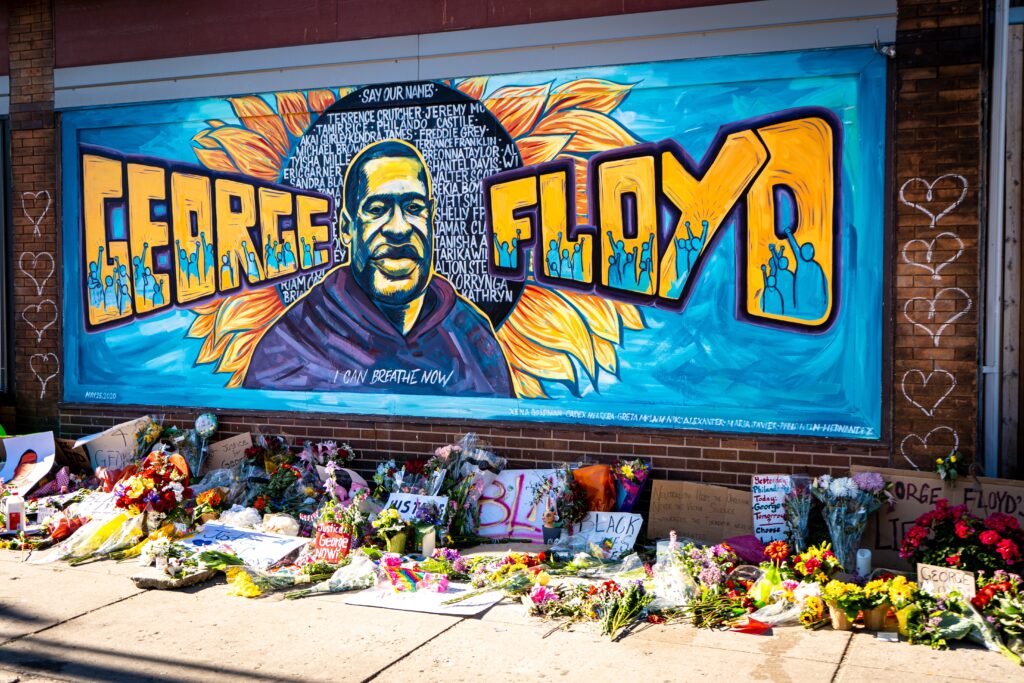
Today, we joined in solidarity with countless others mourning the loss of George Floyd. On May 25, 2020, George Floyd was murdered by former Minneapolis police officer Derek Chauvin in a blatant display of white supremacy and racist police violence. The video of his death, taken by 17-year-old Darnella Frazier, ignited a global movement demanding accountability and a new vision for public safety that divests from policing and instead focuses on solutions that prioritize the safety, health and wellbeing of Black communities. A year after the death of George Floyd and the wave of protests that followed, we’re reflecting on the enduring power of Black organizing, why we must continue to say the names of Black women, girls and femmes killed by police, and the work that remains to be done to transform and remake institutions and systems so that justice and equity is real for all of us. The Power and Legacy of Black Organizing  Nearly half (47%) of all protests in 2020 across the United States were associated with the movement for Black lives, spanning across all 50 states and DC. While systemic racism in policing sparked the uprisings, organizers called for broader radical change across all sectors, systems, and institutions. A recent analysis by Interrupting Criminalization finds that grassroots and advocacy groups won over $840 million in direct cuts in police departments and at least $160 million in additional funding for community services. Cities like Austin, Texas, reduced police funding and redirected funds for housing resources. Other cities like Denver, Colorado eliminated police officers from schools and saved money to use for other services. The national “racial reckoning” forced many organizations and corporations to acknowledge racial inequities in their workplaces and prompted statements and pledges to center antiracism moving forward, with some hiring racial justice consultants to take more meaningful steps to transform their internal practices and culture. Far too many however, have engaged in performative messaging and have yet to back their statements with substantial action and the transparency needed for accountability. Black organizers in 2020 had a tremendous impact on the 2020 election–repudiating the racism of the Trump administration and electing the first Democratic presidential candidate to win Georgia since 1992 and the first woman and first Black and South Asian woman elected as vice president. Last year’s uprisings also sparked a wave of global protests exposing the far-reaching facets of anti-Blackness across the world. Racism and Sexism Erases the Lives (and Deaths) of Black Women, Girls, and Femmes Weeks prior to George Floyd’s death, Breonna Taylor was murdered by police in her home. Although Breonna Taylor’s life and death would eventually receive national attention in the wake of last summer’s uprisings, coverage was initially limited. The uneven pattern of advocacy and mainstream national attention is rooted in long-standing narratives about who experiences police violence and the context in which these events occur, such that cases involving Black women – Sandra Bland, Breonna Taylor and most recently Ma’Khia Bryant – are less likely to spark massive protests and ongoing media coverage. This invisibility of Black women as victims leaves them particularly vulnerable and unprotected from police violence. The #SayHerName campaign, among others, have been advocating for an intersectional analysis of police brutality that also centers Black women and girls, transgender and cisgender, along with lesbian, gay, bisexual, and queer people in conversations to end police violence. Organizing is Pushing Us to Imagine New Possibilities While there have been important changes locally, for example, to city budgets–organizers and communities across the country are calling for bolder, more transformative approaches that push past current boundaries of what many see as possible. It is clear that the death of George Floyd was a catalyst for change in ways unimaginable just years before. More people than ever have been introduced to abolitionist strategies that seek to reduce the need for policing altogether by building systems that center equity, liberation and collective care. The Breathe Act, offered by the Movement for Black Lives, offers a holistic path towards a vision for community safety and comprehensive investment in building the systems that support healthy, equitable and sustainable communities. Black-led organizations are leading the way and are often underfunded. You can support the Movement for Black Lives fund to support organizations building power at the local, state and national levels, here. Today offers an important moment of reflection and opportunity to honor George Floyd’s life by recommitting to racial justice. The fight continues and since last summer, significant groundwork has been paved for a future that honors the fullness of all Black lives.

Uncategorized

CURE Statement on Murders of Asian Women in Atlanta and Rising Anti-Asian Racism and Violence

March 17, 2021 We are devastated by the horrendous events that occurred yesterday which ended in the death of eight people in Atlanta, including six Asian women. These senseless shootings add to the countless examples of how hate, whether in the form of racism, xenophobia, patriarchal violence, and sexism, produce unsafe environments for targeted communities. We are in solidarity with the families of the victims and Asian American colleagues and communities in the fight to stop racialized violence against people of Asian descent.  From the start of the pandemic, Asian American and Pacific Islander communities have been under attack, in large part due to toxic public discourse implicating Asian people for the spread of COVID-19. This racist rhetoric has fueled interpersonal and institutional violence nationwide. Since 2020, there have been 3,800 reports of anti-Asian incidents across the U.S., a vast majority (68%) being attacks on Asian women. The truth is glaring – Asian people, disportionately Asian women, are risking their lives by simply trying to live in America during this time. Historical policies like the 1882 Chinese Exclusion Act, Japanese Internment during World War II, post-9/11 legislation (like the Patriot Act and violent surveillance of several ethnic and religious groups, including South Asian communities), and most recently the exploitation of Asian immigrants through inflammatory rhetoric (ranging from recent bans and policies surrounding HB-1 visas) and raids by federal agencies against “human trafficking” –  have contributed to a long-standing assault on Asian communities.  The increasing violence towards Asian women can be directly linked to patriarchal gender roles, sexism, and anti-sex worker and immigrant bias. This tragedy is a reflection for the intersections of racism and sexism that often target sex workers, migrants, women, femmes, and other vulnerable populations.  Now is a time to listen to and support organizations focused on transformative justice, healing and community care among impacted communities, including:  Asian Americans Advancing Justice Atlanta Asian Americans Advancing Justice Asian American Feminist Collective National Queer Asian Pacific Islander Alliance Asian American Advocacy Fund Red Canary Song NAPAWF  NAPAWF ATL  18MR  Butterfly – Asian & Migrant Sex Workers Collective  Equality Labs 

Uncategorized

2020: A Year of Resilience and Transformation

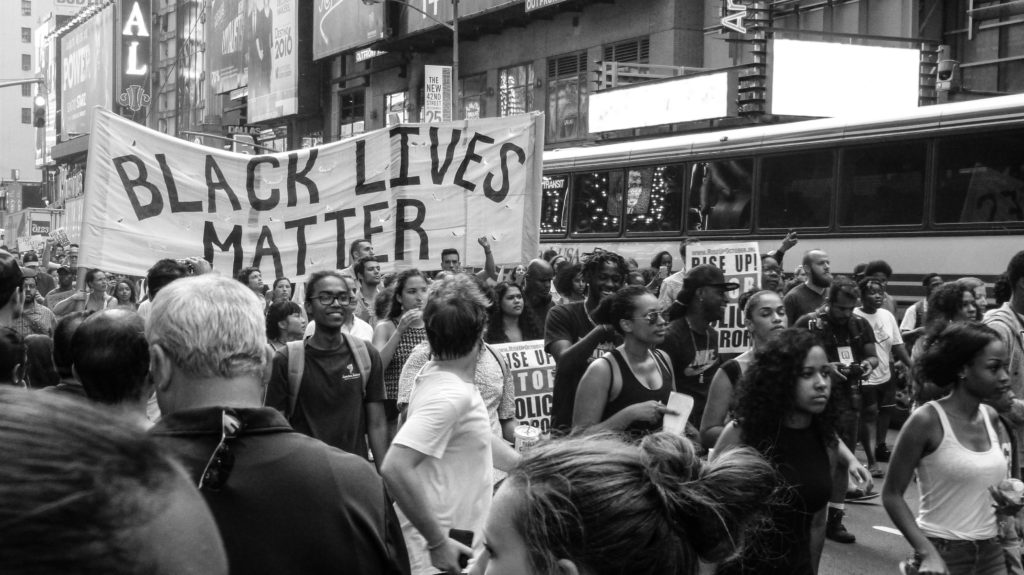
2020 was a year of resilience in the face of deep suffering and pain. The COVID-19 pandemic, which has disproportionately impacted Black, Indigenous and Latinx communities was coupled with deadly police and vigilante violence that took the lives of Black people including Breonna Taylor, George Floyd, and Ahmaud Arbery. While 2020 was challenging for so many reasons, it was also a year of incredible organizing, activism and movement building for equity and racial justice.  Millions hit the streets to demand that Black Lives Matter, and Black and brown people organized and voted to repudiate white supremacy, defeat Donald Trump and elect former Vice President Joe Biden and Senator Kamala Harris–the first Black and South Asian woman to be elected vice president. The vision and labor of love of Black women’s leadership and organizing in the South and in cities like Philadelphia, Detroit and Atlanta, were critical in delivering victories in key states for the Democratic Party.  We are inspired by the collective energy and will for transformative change generated during the year, and are proud to have actively supported and participated and led efforts to build toward the vision for a just future our communities deserve.  Below are highlights of CURE activities in 2020 that reflect our commitment to being bold, resourceful and unwavering in our vision for just neighborhoods, cities, communities, systems and institutions.  2020 Racial Justice Presidential Candidate Scorecard  At the beginning of 2020, CURE garnered national attention for our 2020 Racial Justice Presidential Candidate Scorecard, a resource for voters that summarized the presidential candidates’ policy proposals through a racial equity lens across 10 critical areas. The scorecard also examined candidates’ past and current rhetoric and language around racial justice issues. The scorecard was widely circulated on social media and other major media outlets. On launch day alone, our scorecard Twitter post had nearly 10,000 engagements and was shared by Senator Elizabeth Warren. Articles published in the New York Times, theRoot, HuffPost, Ebony, NewsOne, Essence, and the Wall Street Journal further expanded the reach of the scorecard. CURE’s scorecard influenced several candidates to explicitly state how their plans would advance racial equity. The Buttigieg, Steyer and Klobuchar campaigns all acknowledged the scorecard and submitted policy proposals for CURE’s review. Notably, Senator Warren tweeted about the scorecard a second time in February 2020, accumulating 151 replies, 1020 retweets, and nearly 5,000 likes. To further the reach of the scorecard, we collaborated with community organizations and student groups to host events called Racial Justice 2020: Voting & Building Power for a Just Future in Florida and South Carolina. During these events, attendees learned about the candidates’ policy proposals, heard from local grassroots organizers, and received additional voter education information. The scorecard remained a primary resource for advocates to access information on racial equity proposals released by presidential candidates throughout the election. Most recently, we were invited to discuss the scorecard with students at the Brown School at Washington University in St. Louis and explored ways to expand the scorecard to include local/state elections.  COVID-19 Racial Equity Resource Hub & Webinars In March, in the early days of the pandemic, CURE released the Equitable Response Community Commons, an online hub for equity and justice in the U.S. coronavirus response. The hub is an easily accessible resource for the public to quickly find tools and information in over 20 categories addressing  anti-racism and stigma, policy demands and calls to action, mutual aid networks, testing and health care services, financial assistance, and population-specific issues and outreach materials.  CURE hosted and participated in webinars, media interviews including an appearance on the Make It Plain Podcast with Mark Thompson, and published a  Truthout op-ed, on why Systemic Racism is Making Coronavirus Worse in Black America by our president, Dr. Judy Lubin. In April, in partnership with the City of Philadelphia Office of Black Male Engagement, we co-hosted a webinar, “COVID-19 & Black Men’s Physical, Mental & Spiritual Health.” CURE’s Dwayne Wharton moderated the discussion with a panel of experts exploring COVID-19 disparities in health outcomes, the connection between trauma and health, and how Black men can maintain a healthy mind, spirit, and physical health during the pandemic. We hosted another webinar in May, “COVID-19 & Black Communities: Crisis, Opportunity and Prescriptions for Change.” During the discussion, experts discussed how COVID-19 was impacting Black communities in cities including New Orleans, Detroit and Miami and offered a vision for an equitable recovery plan focused on systemic change and Black health, wealth, self-care and community power. CURE’s Dr. Judy Lubin was also a panelist in the “Our Lives on the Line” virtual town hall hosted by Health Care Voter to discuss the disproportionate challenges threatening Black people during the pandemic, and what all of us must do to hold the government accountable for an equitable recovery.  Conversations on Black Community Development Series In August, in partnership with the Network for Developing Conscious Communities (NDCC), CURE launched Conversations on Black Community Development, a webinar series designed to identify actionable strategies for dismantling structural racism through policies and practices that center wealth building, economic development and racial equity in Black communities. The multi-part series included conversations around building conscious communities, reparations, economic development, elections, community engagement and more. The series was well attended averaging 100 attendees per session from across the nation in various fields. Structural Racism City Profiles At the end of our multi-part webinar series on Black community development, we released seven briefs focused on structural racism in Washington DC, Miami, San Francisco, New Orleans, Philadelphia, New York and St. Louis. These city profiles are resources for organizers, nonprofit organizations, city government officials and others who are coordinating efforts to reckon with the history of racism and anti-Blackness that continue to shape city planning, economic development, housing and policing strategies. The briefs highlight issues such as gentrification, homelessness, food insecurity, and economic and COVID-19 racial inequities. The profiles feature key facts and figures and uplifts the efforts of local organizers and community organizations that are creating just and […]

Uncategorized

Apply Now! Facilitating Racial Equity Organizational Change Learning Collaborative

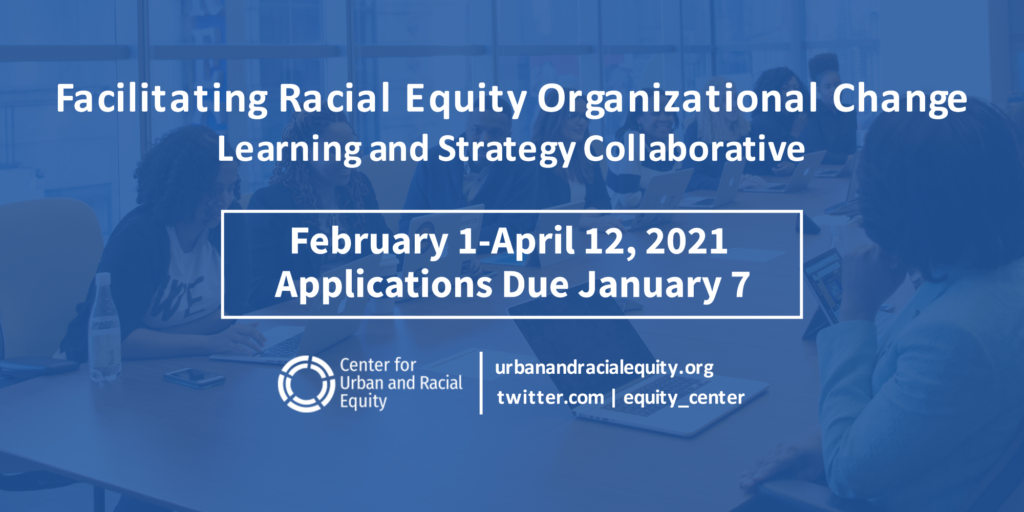
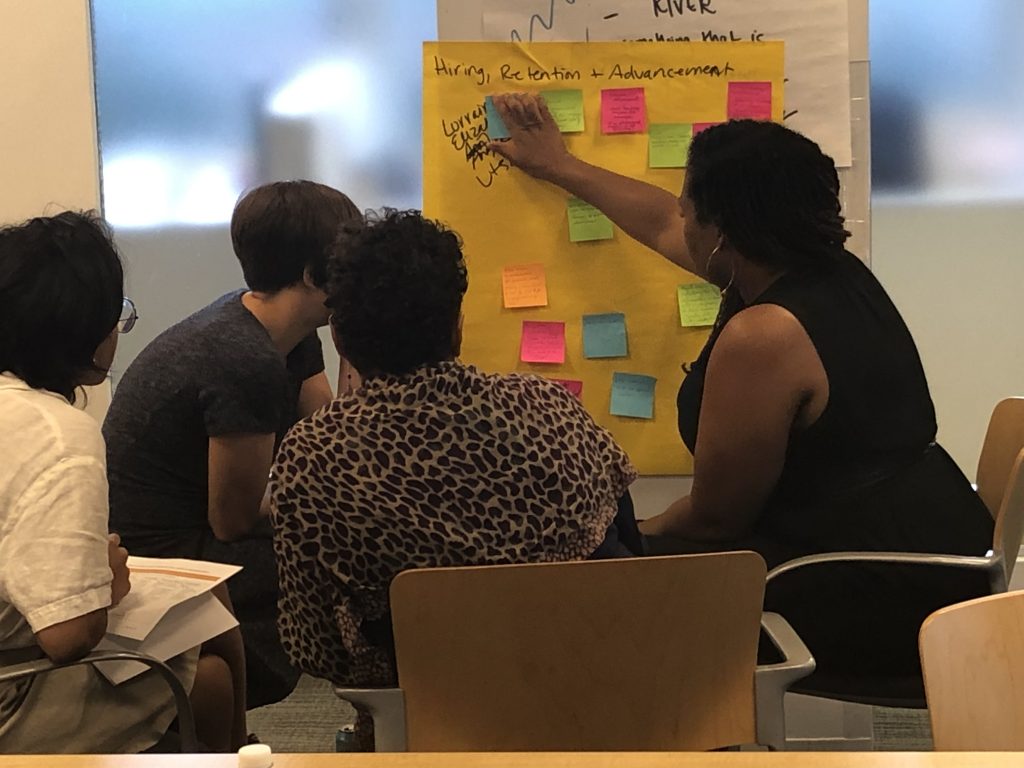
Facilitating Racial Equity Organizational Change Learning and Strategy Collaborative February 1-April 12, 2021 The Center for Urban and Racial Equity (CURE) is pleased to announce a unique cohort training and peer learning experience designed to support organizations seeking to launch or deepen existing efforts to practice racial equity internally and in their communities. Health, community development and housing organizations in the South are encouraged to apply and will be prioritized for this opportunity. Through an interactive learning lab for racial equity teams of 2-3 people from participating organizations, the program aims to build relationships and capacity to apply a racial equity lens, critically assess organizational culture, programs, services and practices, and identify strategies and actions that confront racism and support transformational change. The program will be facilitated by CURE’s racial equity practitioners with experience catalyzing organizational change in public health systems, nonprofit organizations, and city governments. Cohort participants leading racial equity work in their organizations will be supported through a structured curriculum, collaborative learning and planning activities, coaching and guidance on strategies and practices to advance equitable outcomes for Black and brown people and communities.   What are the intended outcomes for cohort participants and organizations? Through the Facilitating Racial Equity Organizational Change cohort experience, participants will:  Build shared language and analysis of institutional and structural racism and engage in critical reflection of how race and racism has shaped your organization’s culture, strategy and practices Apply a racial equity organizational change framework to help you plan and design your change process and align policies, practices, programs and services with a deeper commitment to racial equity and justice Learn and practice equity-rooted facilitation methods you can use to support others in interrogating ideas about race, racism, and organizational behavior Identify strategies and next steps for integrating trainings, assessment and action planning processes in your organization  Develop relationships, collaborate and practice with peers, and receive coaching and guidance to address specific challenges facing your organization and racial equity team Is this program right for me and my organization? The program is designed for organizations that have established or are preparing to launch a racial equity working group and planning process. Cohort participants should have some experience tackling equity-related issues in their community and be positioned in their organizations to work collaboratively with colleagues to critically reflect, problem-solve and implement solutions that promote racial equity. There should be at least two participants per organization. Previous anti-racism or racial equity training is helpful, as some course concepts will be covered at a brisk pace.  How is the program structured and what is the time commitment? Up to 5-6 organizations (2-3 people from each organization) will come together to learn, discuss, and workshop strategies to advance racial equity across key organizational areas including programs and services; community engagement and partnerships; policy advocacy; hiring, retention and advancement; and contracting and grantmaking. The program includes a combination of activities that incorporate: Trainings and workshops (all sessions held virtually) Building Foundations for Racial Equity – Monday, February 1| 1:00pm – 4:00pm CT  Understanding Institutional and Structural Racism – Monday, February 8 | 9:00am – 5:00pm CT Racial Equity Organizational Change Process Design – Tuesday, March 16 | 2:00pm – 5:00pm CT Facilitation, Implementation and Next Steps – Monday, April 12 | 10:00am-12:00 pm CT; 1:00pm-3:00pm CT Small group learning sessions and assignments to work on with your team Self-reflection, pair learning and practice Coaching and technical assistance from CURE facilitators for individual organizations at pre-scheduled office hours and/or through emailing questions privately or to the cohort email list. As a cohort member, participants must make a commitment to attending the full day-long training, three cohort workshops and completing individual and group assignments between cohort sessions. These activities total approximately 42 hours over the course of 2.5 months.  What is the application process? Applications are now closed. To receive notification of future learning collaboratives, please join our email list.

Uncategorized

A Victory in the Fight for Racial Justice

Biden-Harris Administration Must Meet Demands Behind the Votes Change was on the ballot and the people have spoken. CURE unapologetically celebrates the defeat of Donald Trump as an important victory in the fight for racial justice and the movement for Black Lives. We celebrate the tireless work of grassroots organizers and organizations that created a path for this victory by mobilizing a historic turnout of Black and brown voters. We congratulate Senator Kamala Harris–the first Black and South Asian woman to be elected vice president on her barrier-breaking accomplishment. And we lift up the vision and labor of love of Black women’s leadership and organizing on the ground in cities like Philly, Detroit and Atlanta, where the votes of Black voters were critical in delivering a victory in key states for the Democratic Party. As Joe Biden and Kamala Harris begin planning their transition into office, the reasons why so many Black voters endured long lines and other voter suppression tactics to usher in a new presidential administration can’t be lost or ignored. “For many of us the election was about repudiating white supremacy and saving this country from the racism that is eating America at its core,” said Dr. Judy Lubin, president of CURE. “Black people organized and voted to point this country in the direction toward the healing, justice and systemic change we need to move us closer to a country where we can truly be healthy, safe and free.” Under Trump we endured open support of white supremacy and police violence. Naked voter suppression, dismantling of anti-discriminatory housing policies and the intentional mishandling of the COVID-19 pandemic, leading to the deaths of over 230,000 people and  avoidable suffering and economic despair in Black, Latinx and Indigenous communities. The election of Joe Biden and Kamala Harris offers an opportunity to begin to address the long list of harms by Donald Trump and the Republican Party’s embrace of Trumpism. That the election was decided on such slim margins despite the injustices of the past few years is a reminder that the just future that we know is possible will not be won without struggle. Now the work begins to hold the Biden-Harris administration accountable for responding to the demands behind the votes. When CURE launched our 2020 Racial Justice Presidential Scorecard during the Democratic Primaries, we anticipated this moment. We critically scored the candidates on their policy proposals to push them to do better for our communities because the work of building a country that works for all of us will continue no matter who is in office. We urge the Biden-Harris administration to listen to the demands behind the votes by aligning their agenda and plan for the first 100 days with calls from communities to address COVID-19 racial health and economic inequities, divest from incarceration and policing, and advance policy strategies that allocate resources at the scale necessary to meet the challenge of dismantling systemic racism.

Uncategorized

Voting to Bring In Justice

This month we celebrated the birthday of Fannie Lou Hamer– civil rights champion, food justice advocate and founder of the Mississippi Freedom Democratic Party. Hamer’s words speak powerfully about 2020 and the choice we face on Election Day. We have seen so much injustice the last few years and our charge is to do what’s right to bring in justice so that Black people can be safe, healthy and free. “To support whatever is right, and to bring in justice where we’ve had so much injustice.” – Fannie Lou Hamer COVID-19 health inequities have hit Black communities hard, with Black workers making up a significant proportion of the essential workforce that is keeping the economy going at a time when those of us who enjoy social and economic advantages are able to stay home to reduce the risk of contracting COVID-19. Racism hasn’t stopped during the pandemic and recent police murders like those of Breonna Taylor have brought thousands out on the streets again to call for an end to state sanctioned and vigilante violence against Black people. Out of the protests we’re seeing the movement for Black lives reflected in racial equity trainings and organizational change processes launching in workplaces, organizations and institutions. In response to federal agencies recognizing the need to dismantle racism within their own ranks, President Trump issued The Executive Order on Combating Race and Sex Stereotyping, a order that prohibits using federal funds to administer racial equity training at federal agencies and in public schools. With this order, the administration seeks to undermine the important anti-racist work that this moment calls on each of us do. Our vote is one of many critical ways we can work to bend the arc of history toward justice. With voter suppression activities increasing as November 3rd approaches, we are sharing a few voter resources to share and help get out the vote. A list of voter registration deadlines from Vote.org can be found  here. For voter protection information, go to 866ourvote.org or call 866-OUR-VOTE. For more information on voting registration, voter protection, and general election information, please visit these sites below:  Lawyers Committee For Civil Rights Under Law: www.lawyerscommittee.org Common Cause: www.commoncause.org NAACP: www.naacp.org/vote National Conference of State Legislatures: www.ncsl.org Color of Change: www.coc.turbovote.org M4BL: www.m4bl.org/policy-platforms/free-the-vote Black Lives Matter: www.blacklivesmatter.com/what-matters-2020

Uncategorized

Racism Kills, Police Violence Must End

We join in solidarity with the families and friends of George Floyd, Breonna Taylor, Tony McDade and with protestors demanding justice and accountability for all acts of police violence, and for an end to the racist system of policing that threatens the life, health and livelihood of Black people and communities.  Policing remains one of the principal forms of racial oppression, terror and violence inflicted on Black people in America. Policing is part of an overarching system of mass racial criminalization, in which Black people are more likely to be profiled, suspected, arrested, harassed, brutalized, incarcerated, and sentenced to death. Police brutality is among the most horrific manifestations of the deeply rooted history of racial violence in the U.S. This violence produces wide-ranging trauma, is a threat to mental and physical health and denies our humanity.  In the middle of a coronavirus pandemic made worse by the effects of systemic racism, Black Americans are at increased risk of contracting coronavirus and have a 3.5 times higher risk of death from COVID-19 than whites. Police violence and COVID-19 racial injustices are rooted in structural racism that has shaped institutions and workplaces including law enforcement and health care.  Racism is everywhere and it’s not surprising that we are seeing the same patterns in cities and towns across the U.S., in many places that CURE is working with partners to build capacity to undo racism in their organizations and to shift power to the communities that they serve. We spent a good part of last year in St. Paul, Minnesota facilitating racial equity conversations and our hearts hurt for our friends, colleagues and the communities directly impacted by the events of the past few days.  While city governments are cutting funding to housing, health care, mental health and other critical social services, policing budgets are increasing. Ending police violence will take comprehensive action including community-based alternatives to policing, community oversight of law enforcement to ensure transparency and accountability, and defunding police departments and redirecting funds to support housing, jobs, health care, schools, and resources that eliminate the need for police and give our communities room to thrive. Resources: We look forward to building with and continuing to listen and learn from organizers, colleagues and partners as we work to build a just future together. For more information and to support organizers working to end police violence: Black Visions Collective: https://www.blackvisionsmn.org Reclaim the Block: https://www.reclaimtheblock.org/home Black Lives Matter: https://blacklivesmatter.com A World Without Police: http://aworldwithoutpolice.org Sociologists for Justice: https://sociologistsforjustice.org Campaign Zero: https://www.joincampaignzero.org

Uncategorized

COVID-19 and Black Communities: Crisis, Opportunity and Prescriptions for Change (Key Takeaways and Actionable Items)

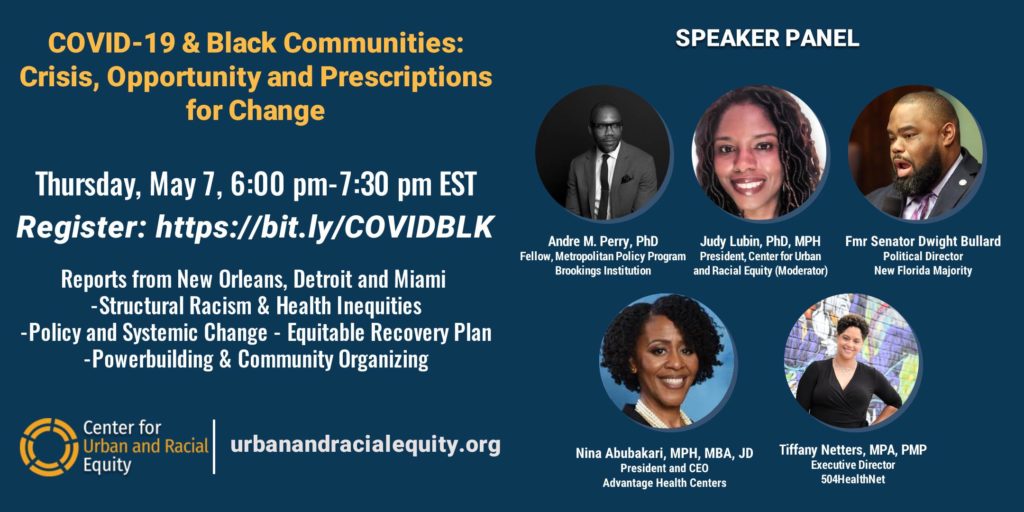
Cities across the country have seen disproportionate cases and deaths among Black residents due to COVID-19. Many have asked what can be done to address these inequities in the short and long-term. The Center for Urban and Racial Equity (CURE) hosted a webinar last Thursday, COVID-19 & Black Communities: Crisis, Opportunity and Prescriptions for Change, to hear reports directly from Black public health professionals and racial justice advocates in hard hit cities and identify strategies for an equitable response and recovery for Black communities. The webinar was moderated by CURE’s president, Dr. Judy Lubin and featured four speakers: Tiffany Netters, MPA, PMP, Executive Director, 504HealthNet Nina Abubakari, MPH, MBA, JD, President and CEO, Advantage Health Centers Dwight Bullard, Former State Senator and Political Director, New Florida Majority Andre M. Perry, PhD, Fellow, Metropolitan Policy Program, Brookings Institution The following provides a summary of key takeaways from the discussion including values and and policy priorities that should guide local, state and national responses to COVID-19 racial inequities. Reality on the Ground – Reports from New Orleans, Detroit and Miami “We have a humanitarian crisis going on right now.” Tiffany Netters, Executive Director, 504HealthNet New Orleans – 504 HealthNet in New Orleans serves more than 190,000 patients, more than 70% of whom are Black. Before the COVID-19 crisis, hospitality workers and incarcerated individuals were falling through the cracks of the healthcare system in New Orleans, according to Netters. Community-based health centers, many created during the Civil Rights Movement, were not receiving appropriate personal protective equipment (PPE). It was only through local organizing that PPE has been received and is now being distributed by 504 HealthNet to its member organizations. Additionally, as part of the organization’s response, 504 HealthNet has developed two community hotlines for residents to obtain information about testing and treatment resources. “The history that we have here in terms of inequities is long-standing.” Nina Abubakari,  President and CEO, Advantage Health Centers Detroit –  Advantage Health Centers was originally started as Detroit Healthcare for the Homeless. In her opening remarks, Abubakari highlighted three important vulnerable populations including the incarcerated, elderly, and homeless. Abubakari grounded her report on COVID-19 inequities in the long history of housing discrminiation in Detroit that has led to contemporary housing issues including a property tax issue where residents were overtaxed by $600 million dollars, causing a third of Detroit houses to go into foreclosure. Furthermore, Black Michiganders have an unemployment rate of 18.7% –approximately twice the rate of whites, and disproportionate representation among the state’s homeless populations. Nationally, Black Americans represent 40% of the homeless population yet comprise only 13% of the total population. According to Abubakari, we still have a long way to go to ensure that necessary testing and contact tracing needs are met. Miami – Former Florida State Senator Dwight Bullard described his work with New Florida Majority and their effort to create a civic platform for historically underserved and marginalized communities in the most disregarded areas. He discussed how the Florida Governor and Senators’ reliance on information from the Trump administration led to misinformation and disinformation about coronavirus. Bullard also described the lackluster response of the City of Miami to the needs of homeless and incarcerated populations in the city. To respond to COVID-19, New Floria Majority has leveraged its voter registration staff to do virtual wellness checks, conduct surveys to assess resident needs, and host remote town halls. According to Bullard, the digital divide between Black and Latinx communities and White communities has come into clear focus in the state with at-home learning, with reports of over 20% of students not logging onto online learning platforms.  “There’s nothing wrong with black people that ending racism can’t solve.” Dr. Andre M. Perry,  Fellow, Metropolitan Policy Program, Brookings Institution Dr. Andre Perry discussed how the combination of housing devaluation, poverty, underlying medical conditions, environmental racism, and other factors have manifested themselves into disproportionate death among Black people in the COVID-19 pandemic. He reminded the audience that COVID-19 has exposed the vulnerabilities caused by past racism. For example, underlying medical conditions have been caused by structural inequality through policy, not individual behaviors. Dr. Perry also highlighted that Black people receive about half the number of loans as white people, and the loans usually have higher interest rates. He noted that Black homes across the country are devalued compared to white homes, causing more than $156 billion in losses. Perry highlighted that the federal government so far has not applied a racial equity lens to COVID-19 recovery efforts including the fact that only 5% of black businesses received money as part of the Paycheck Protection Program. Values and Principles to Guide COVID-19 Response A racial equity lens should be the core value guiding the distribution of resources  Prioritize essential workers – for testing, benefits, insurance and other resources Mindfulness and awareness of the data sources that are being used to talk about communities of color during the crisis  Focus on community listening sessions and qualitative data  Transparency – Monitor federal apportionment of crisis stimulus funding Localize response – Block grants for mayors with local expertise and money for researchers in specific local contexts It’s time to join something – labor unions, local organizations, political organizations, NAACP, Urban League, other black-led organizations  Representation matters – more Black governors would have led to a better response for Black people  Wi-fi should be a public utility Telehealth – continue to utilize technology in a medical context Priorities for an Equitable Response and Recovery Several actionable strategies were outlined to address immediate gaps and opportunities, as well as long-term strategies to ensure an equitable recovery for Black communities. Address Needs of Vulnerable Populations Federalize essential workers and provide PPE, hazard pay, insurance and paid sick leave Invest in testing and increased access to care — Vulnerable communities should receive testing first – acknowledge that testing requirements such as “drive- through” testing excludes certain people Address the disproportionate impacts of the criminal justice system on communities of color — Release […]

Scroll to Top

Judy Lubin

Dr. Judy is an applied sociologist, racial equity changemaker, yoga and mindfulness practitioner, author, auntie, bestie and beach lover. Judy’s elemental nature is water, and with her she brings calming, reflective energy to hold space for deep listening, inner work and transformative dialogue. 

The curator of the Embodied Justice program, she hosts the accompanying podcast and co-facilitates events and dialogues focused on the collective healing and sustainability of Black changemakers.

At CURE, Dr. Judy has built transformative racial equity frameworks and change management processes that have impacted thousands of lives. She began her career focused on health disparities, recognizing that stress from societal racism can become embodied and manifested through “weathering” that prematurely ages the body and shortens the lifespan of racially marginalized communities. 

She is unapologetically committed to centering Black people and the communities that have inspired her life’s work. The daughter of Haitian immigrants, she grew up in South Florida surrounded by music, her grandmother’s herbal garden, and the struggle to make it in a country that saw her family as outsiders. 

In 2022, after experiencing multiple health emergencies coupled with burnout from the intensity of the “racial reckoning” that increased demand for CURE’s racial equity services, Judy began a process of listening to the wisdom of her body, healing old trauma wounds, and reclaiming rest and her love of mind-body healing. During this time she explored somatics, indigenous and and ancestral healing practices and earned certifications in multiple healing modalities including yoga and energy medicine.

Emerging from a place of rest and listening to what her soul wanted to share, she now weaves mindfulness, body-awareness and spiritual activism to support changemakers and organizations to regenerate their leadership and give to the world from a place of ease and wholeness. 

Long committed to promoting women’s health and wellness, she is the author of The Heart of Living Well: Six Principles for a Life of Health, Beauty and Balance.

Find Judy on instagram or linkedin at @drjudylubin, where she (occasionally) shares posts celebrating Black joy, healing and well-being.

Shawn J. Moore

Residing at the intersection of leadership and mindfulness, Shawn creates sacred spaces for stillness and self-inquiry to help social impact leaders align their strengths, intention, and impact. Through his integrative approach, he holds transformative containers for self-renewal, personal discovery, and capacity-building that ease clients on their journey towards peace, clarity, and freedom.

Shawn is committed to empower changemakers to become embodied leaders – unified in mind, body, and heart – with the tools to mindfully pause, reconnect to their inner knowing, make strengths-driven decisions, and lead the change they believe the world needs.  

Reckoning with his own contemplation of burnout, purpose, and alignment, Shawn transitioned out of his role as Associate Dean of Student Life & Leadership at Morehouse College in the fall of 2021 to focus more on mindfulness and stillness-based training programs and workshops. 

While leadership resonates with him deeply, it is his personal and spiritual practices that allows him to continue to show up for himself and others. He is a yoga teacher (E-RYT® 200, RYT® 500, YACEP®), sound and reiki practitioner, meditation teacher, Yoga Nidra facilitator, and Gallup-Certified Strengths Coach, all focused through a Buddhist lens and 17 years of personal practice. He has contributed workshops, practices, and educational opportunities for celebrities like Questlove and Dyllón Burnside, and various yoga studios and colleges, Yoga International, Omstars, Melanin Moves Project, the Human Rights Campaign, Spotify and Lululemon. He currently serves as the Facilitation and Community Manager for BEAM (Black Emotional & Mental Health Collective).

Shawn hosts a podcast called The Mindful Rebel® Podcast that creates a platform to continually explore this unique intersection of leadership and mindfulness. Find him on instagram @shawnj_moore 

This Website Collects Cookies.

We use cookies to analyze website traffic and to provide a better browsing experience.